To invest in crypto safely and smartly, you should use money you can afford to lose, research your chosen assets, choose an appropriate purchase method, and secure your holdings before adding more. You reduce avoidable mistakes through careful preparation, while your investment remains exposed to sharp price swings and possible loss.
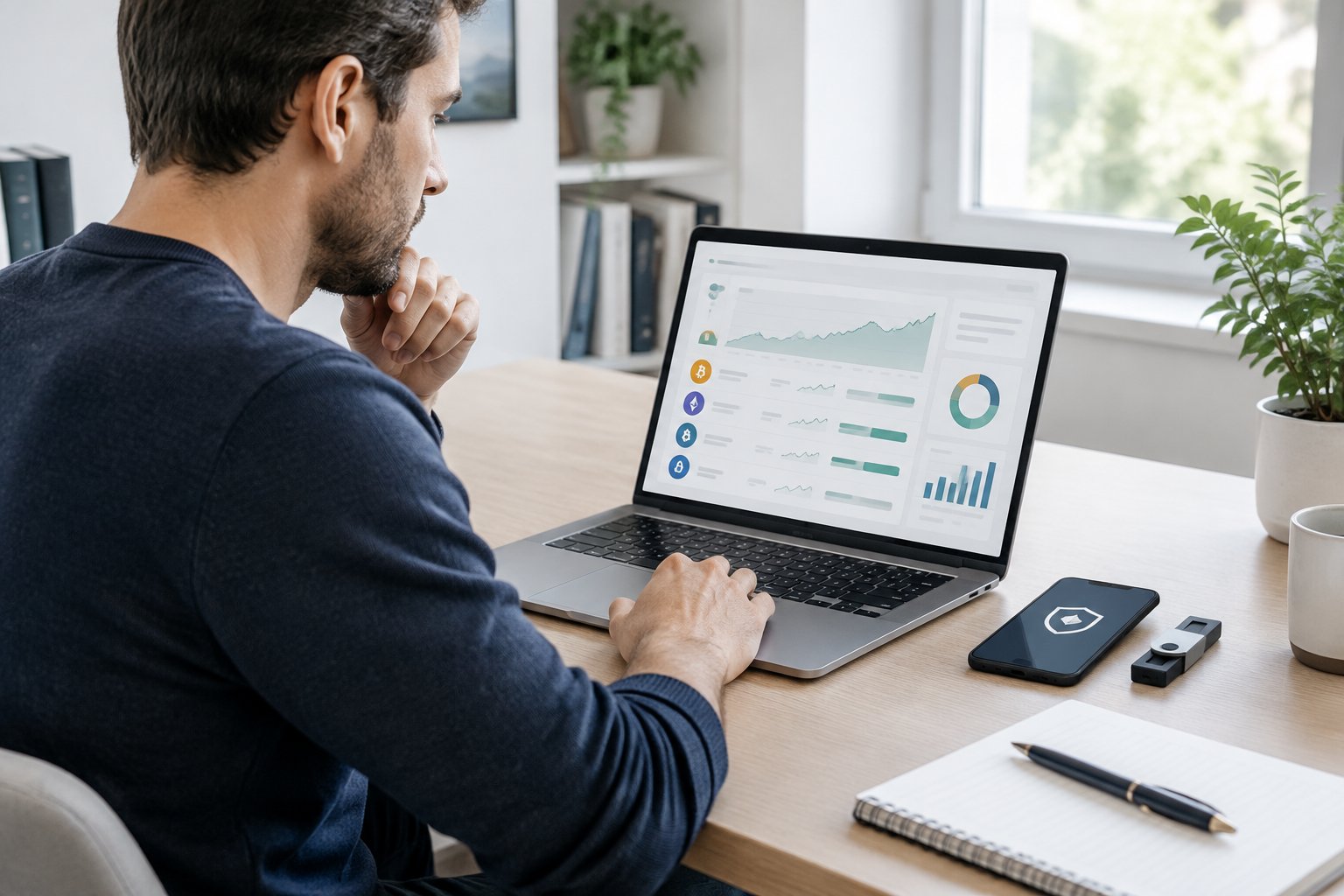
Your first goal in cryptocurrency investing is a manageable decision: how much exposure fits your finances and how much responsibility you want. With digital assets, you face both market risk and practical risks, including lost account access or a transfer sent to the wrong address.
You do not need to become an active trader to learn how to invest in crypto. You need a clear budget and a process you can repeat without pressure.
How Much Can You Risk, and Which Assets Do You Understand?

Your crypto investment strategy should begin with a loss limit that leaves your essential expenses and long-term goals intact.
Keep your emergency savings separate, address expensive debt, and protect money needed soon. Your cryptocurrency investment should remain affordable even if its entire value disappears. Avoid borrowing to fund it.
Before choosing an asset, explain its purpose in plain English:
- Bitcoin (BTC): You gain exposure to a network designed for peer-to-peer transfers and an asset with a limited supply.
- Ethereum (ETH): You gain exposure to the native asset used to pay for activity on Ethereum, including smart contracts, programs that run on its blockchain.
- Altcoins: You need asset-specific research. For XRP, for example, examine its role on the XRP Ledger, token supply, and demand.
- Stablecoins: With USDC and similar tokens, you face issuer and reserve risks, plus the risk of losing the intended dollar peg.
When researching blockchain technology, ask who validates transactions and who controls upgrades. Decentralisation varies across networks. If you explore decentralized finance or NFTs, you also take on application risks and potentially thin resale markets.
For each asset, write down why you expect demand, how new tokens enter circulation, and what would change your view. A low token price tells you little without the supply. Established names still carry substantial investment risk.
How Do You Buy Crypto Through an Exchange or ETF?

You gain direct ownership through a cryptocurrency exchange or price exposure through crypto ETFs held in a brokerage account.
| Your Decision | Buying Crypto Directly | ETF Exposure |
|---|---|---|
| What you hold | Crypto assets | Fund shares |
| Your control | Transfers and network use | Brokerage trading |
| Your costs | Trading, spread, withdrawal fees | Fund fee and trading costs |
| Your custody responsibility | Provider selection or self-custody | Fund custodian exposure |
| Your protections | Depend on provider and product | Securities disclosures; market risk remains |
For example, IBIT gives you Bitcoin price exposure and carries a 0.25% sponsor fee. With an Ethereum ETF, examine its holdings and staking policy. Read each prospectus: spot crypto ETPs covered by SEC guidance are not registered under the Investment Company Act of 1940.
If you are learning how to buy cryptocurrency directly:
- Compare state eligibility, total costs, withdrawal options, and account security. Treat Coinbase, Kraken, Crypto.com, and OKX as research examples, without assuming equal U.S. availability.
- Complete identity verification (KYC), used for anti-money laundering (AML) compliance. FinCEN registration provides no investment guarantee.
- Fund your account through a supported payment method and review the full purchase cost.
- Choose your order. A market order seeks immediate execution at available prices. A limit order sets your maximum purchase price; it might remain unfilled.
The best crypto exchanges for your needs are those whose terms fit your location and intended use. A popularity ranking cannot establish that fit.
How Do You Protect Your Wallet and Avoid Crypto Scams?
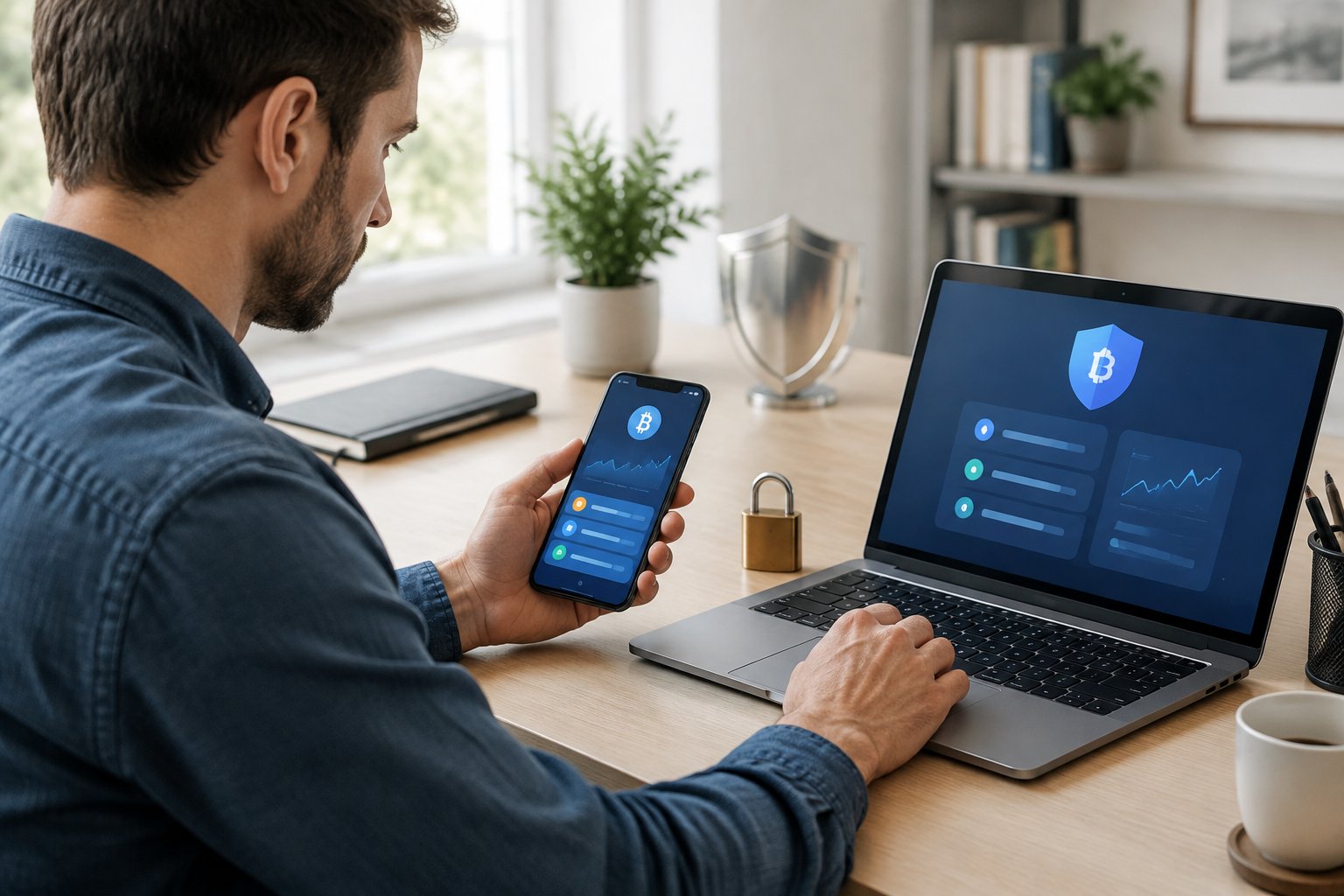
Your crypto security rests on protecting account access and choosing custody you know how to manage.
With custodial storage, you trust a provider to safeguard private keys. With self-custody, you control those keys and take responsibility for recovery. Your crypto wallets manage access to blockchain assets.
You encounter several wallet types:
- Hot wallets: You use internet-connected software wallets, with examples including MetaMask, Coinbase Wallet, and Trust Wallet.
- Cold wallets: You keep signing keys offline through cold storage. Hardware wallets include Ledger and Trezor devices.
- Paper wallets: You face difficult creation and spending procedures, making these a poor beginner choice.
Protect your seed phrase, the recovery words that restore wallet access. Keep it offline in a secure location, separate from your device. Never share it with support staff or enter it into a link sent by someone else.
For exchange accounts and email, enable two-factor authentication (2FA). You get stronger phishing protection with a physical security key than with text or email codes.
Before sending crypto transactions, match the asset, network, address, and any required memo. Send a small test amount and confirm receipt before transferring the balance.
Treat guaranteed returns, unsolicited investment help, and demands for extra payments to unlock withdrawals as scam warnings. If you suspect fraud, stop payments, preserve messages, and contact the platform through its official app.
You receive no FDIC insurance on crypto assets, including protection against a crypto company’s bankruptcy.
How Do You Manage Purchases, Portfolio Risk, and Taxes?
You keep crypto investing manageable by setting a purchase schedule, limiting portfolio exposure, and recording activity as it happens.
With dollar-cost averaging, you invest a fixed amount at regular intervals. You spread purchase timing across different prices, but you receive no guarantee of profit or protection from lasting losses. Pause scheduled purchases if your finances change.
Set a maximum crypto allocation within your broader portfolio and a review schedule. Holding several tokens still leaves you exposed to shared crypto-market risks.
Frequent crypto trading adds fees and taxable events. Stop-loss orders also have limits: a stop-market order might execute below your trigger price, while a stop-limit order might never fill during a fast decline.
If you consider staking rewards on a proof-of-stake network, examine lockups and validator penalties. With crypto mining, account for equipment and electricity costs. Neither activity removes the underlying asset’s price risk.
For U.S. crypto taxes, keep records of:
- Purchase dates, quantities, and dollar costs.
- Sales and crypto-to-crypto exchanges.
- Fees and transfers between your own wallets.
- Rewards and their dollar value when received.
You generally recognize gains or losses when selling, swapping, or spending investment crypto. Staking and mining receipts also create income obligations.
Under U.S. broker-reporting rules, you should expect gross-proceeds reporting from January 1, 2025, and basis reporting for certain transactions from January 1, 2026. Reconcile statements with your records, especially after wallet transfers. As crypto regulations change, use tax-year-specific instructions or qualified tax advice.
Start Small With a Plan You Can Maintain
You have a workable crypto investment strategy when your budget, purchase method, and custody choice fit your finances and skills.
Keep your initial exposure small enough to manage without financial strain. Maintain your crypto security practices, record each transaction, and review your allocation on a set schedule. Before increasing your commitment, make sure your essential savings remain protected and your reasons for holding the asset still apply.
Frequently Asked Questions
You can resolve several common beginner questions without making price predictions or taking on extra trading complexity.
Do you need to buy a whole Bitcoin?
You can buy a fraction of Bitcoin through platforms that support fractional purchases. Your minimum purchase and fees depend on the service and order method you use.
Does a cheaper coin give you more room for gains?
You cannot judge potential returns from a coin’s unit price alone. When deciding how to invest in cryptocurrency, compare total supply, token issuance, and the value implied by the full circulating supply.
Can you hold crypto exposure in an IRA?
You can hold eligible crypto-related ETFs through an IRA when your brokerage permits them, while a specialized crypto IRA provides another route to digital-asset exposure. You still face investment risk, and your account’s tax treatment depends on the IRA type and compliance with retirement-account rules.
Are transfers between your own wallets taxable?
You generally do not trigger a capital gain merely by moving the same asset between wallets you own. Keep both sides of the transfer in your records so you can preserve its purchase history and identify any separate fee-related tax treatment.